Our Blog

There’s an App for That!

April 6th, 2022

Modern orthodontic technology has led to major changes in the world of braces. Brackets are smaller and come in both metal and ceramic materials. Wires are more efficient and more comfortable. Elastic bands come in a variety of vivid colors, or you can choose brackets which work without bands. You can even decide on clear aligners, with no brackets or wires at all.

And since modern software technology has given us a program for just about everything, it’s no surprise that you can install apps to help make your modern orthodontic treatment more convenient and more enjoyable. What can an orthodontic app do for you?

  • Keep Track of Your Appointments

There are many apps out there that are designed to help you keep your treatment on track with appointment reminders. This sounds pretty basic, but when you have school, work, sports, and activities filling your days, it doesn’t hurt to get a timely reminder that our Youngstown, OH office will be expecting you in the near future. And, since missed appointments delay your progress, you are making sure you achieve your beautiful, healthy smile in the shortest amount of time.

  • Mapping Out Your Routine

You know how important it is to keep track of the hours you wear your aligners. Apps can help remove the guesswork with a timer to make sure you’ve got the hours you need to progress to the next phase of treatment. Apps can also remind you when you’re ready for a new aligner, and let you track your progress in one convenient place with selfies after each aligner transition. After all, it’s really exciting to see just how far you’ve come.

If you wear traditional braces, there are apps with very helpful reminders for you, too. For example, forgetting to wear your elastics can really delay your progress. An app can let you know when it’s time to wear your rubber bands and keep track of your hours. It can also remind you to replace your bands regularly, because elastics become less elastic through the day. And take advantage of the countdown feature some apps offer to see just when you can expect to be done with your treatment when you keep on top of your routine.

  • Brushing and Flossing? Apply Yourself!

A big part of making your smile look its best after your orthodontic treatment is making sure you take care of your smile during your treatment. This means keeping up with daily brushing and flossing, and using proper technique. Two minutes brushing, twice each day, and flossing at least once a day are the basic recommendations for preventing cavities and gum disease. (During orthodontic treatment, you might need to increase your brushing and flossing—ask us how often is best for your needs.)

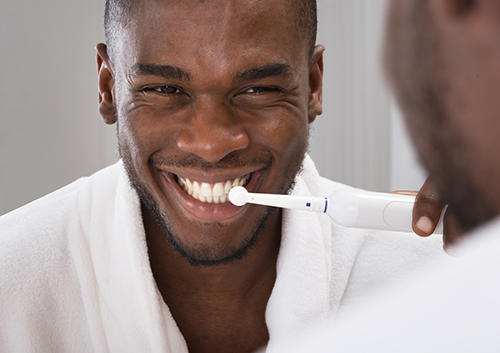
And to help you make sure you get a solid two minutes of brushing twice a day? Try an app that plays two minutes of your favorite music with a perfectly timed brushing playlist. Apps can also send you brushing and flossing reminders, let you know when it’s time to change your toothbrush (every three months, please!), and give you tips on better brushing and flossing techniques.

  • Have Fun with Your Appearance

Not sure just how you’ll look in braces? Get a preview with an app that uses one of your selfies to model different types and styles of braces, brackets, bands, and aligners. Metal brackets? Ceramic? Elastic bands in your favorite colors? No bands at all? Hardly visible aligners? Find the look that works for you!

  • When Problems Happen

Some apps will even guide you through common orthodontic problems, such as applying wax to an irritating bracket or relieving discomfort. Always remember, though, an app is not an orthodontist. If you have a serious problem or concern, call us immediately.

  • Orthodontist Approved

If you’ve checked out the orthodontic apps available for your operating system, you know that there are a lot of options out there. If you’re looking for an app providing information about your treatment, tips for dealing with your braces, or a convenient way to track your progress or even be part of a community, you want the best information, tips, and conveniences possible—and hopefully all in one place.

To help you find the best orthodontic app for you, talk to Dr. Anthony Bisconti! We might know just the app for your specific needs. Whether you choose aligners or brackets and wires, consider all the wireless options that can make your life easier, your dental care more complete, and—just maybe—your orthodontic experience a little more fun.

Can You Chew Gum and Wear Braces?

March 30th, 2022

Well, of course you can chew gum and wear braces. But, should you chew gum and wear braces? That can be a sticky question.

For many years, the answer was a firm “No.” Not only did our favorite chewables literally gum up the (dental) works, but they were filled with loads of the sugar that cavity-causing bacteria love to feed on. The result? A much better chance of damage to your orthodontic work, and a higher risk of cavities near your brackets and wires.

But times, and gum recipes, change. Today’s sugar-free gum provides us with some new ideas to chew over.

  • Sugarless gum is much less sticky than regular gum, so it is much less likely to stick to your appliance. If there is any chance that gum will damage your wires or brackets, we’ll let you know that it’s best to wait until your braces are off to indulge.
  • Some orthodontic patients find that their jaws and ligaments are less sore if they chew gum for a few minutes after an adjustment.
  • Most important, studies suggest that chewing sugarless gum might actually help prevent cavities from forming. How is that possible?

Because chewing gum increases our production of saliva! Okay, we don’t normally find saliva an exciting, exclamation-point-worthy topic, but let’s look at the dental benefits:

  • Saliva washes away food particles and bacteria. And because braces can trap food when we eat, it’s great to have some help washing away any meal-time souvenirs.
  • Saliva helps neutralize acids in the mouth. The acids found in foods and produced by oral bacteria lead to cavities, so diluting and neutralizing their effects provide important protection for our enamel.
  • Saliva helps bathe the teeth in minerals that can actually rebuild weakened enamel. Acids in the mouth attack minerals in the enamel such as the calcium and phosphate that strengthen our teeth. Fortunately, saliva provides calcium, phosphate, and fluoride that can actually help rebuild weakened enamel.

So, should you chew gum and wear braces? The real question is, should you chew gum while you’re in braces? Dr. Anthony Bisconti and our team are more than happy to provide the right answer for you! Talk to us at your next visit to our Youngstown, OH office about the potential benefits and drawbacks of dentist-approved sugarless gum. Depending on the kind of gum you choose and the kind of orthodontic work you are having done, the answer just might surprise you.

Overbite or Overjet?

March 23rd, 2022

The words “overbite” and “overjet” certainly sound similar. Both conditions concern your front teeth. Both conditions fall under the same category of bite problems—Class II malocclusions, if you want to be technical. So it’s not surprising that they’re often used interchangeably. But while there are similarities, overbite and overjet are also distinctly different.

  • Overbite/Overjet Geometry

In a healthy bite, the front top teeth project slightly beyond, and slightly overlap, the bottom teeth. The key word here is “slightly.” With a Class II malocclusion, the upper front teeth project further beyond the lower teeth than they should.

Of course, teeth and bites are as individual as we are, so there are variations in just how and just how much the overlap occurs. In diagnosing an overbite vs. an overjet, the difference comes down to a matter of vertical vs. horizontal.

An overbite, or deep bite, occurs when the top teeth vertically overlap the bottom teeth more than they should for a healthy bite. Generally, when a person’s top teeth cover more than a quarter of the bottom teeth when biting down, or more than two to three millimeters, that person is said to have an overbite.

An overjet, commonly known as protruding or buck teeth, is the result of a horizontal overlap that is broader than normal. This causes the top teeth to project outward toward the lips more than they do in a typical bite. An overjet is usually diagnosed when the horizontal distance between the top and bottom teeth exceeds two to three millimeters.

  • Overbite/Overjet Causes

The causes for both an overbite and an overjet might be dental (caused by tooth alignment), or skeletal (caused by bone development), or a combination of both. These bite problems can run in families. They are also affected by the size and position of the jaws and the shape and position of the teeth.

Early oral habits, such as prolonged and vigorous thumb-sucking or pacifier use, can also contribute to the development of a Class II malocclusion, particularly an overjet. Consistent pressure from thump or pacifier pushes the teeth outward as they erupt, which encourages them to protrude. These oral habits can affect the shape of the palate and jaw, too.

  • Overbite/Overjet Treatments

There are many types of treatment available to correct teeth and bite misalignments. Dr. Anthony Bisconti will tailor your treatment to your specific malocclusion for the best orthodontic outcome.

If you have a mild malocclusion, and minor dental issues are the main cause of that malocclusion, either braces or clear aligners can be effective for an overjet or an overbite. Elastics (rubber bands) are often used as part of this treatment.

If the malocclusion is due to bite problems caused by uneven upper and lower jaw development, devices called functional appliances can be used with braces to help guide the growth of the jawbones while young patients’ bones are still forming. These include appliances that work inside the mouth to help the upper and lower jaws grow proportionally, and external appliances such as headgear.

In some cases, where the malocclusion is skeletal in nature as well as dental, surgical treatment might be necessary to reshape the jawbone itself. Orthodontic treatment is usually needed as well both before and after surgery.

  • Overbite/Overjet Consequences

Over time, a deep overbite can cause damaged gum tissue, worn enamel, and fractured teeth. When teeth protrude because of an overjet, they can lead to self-consciousness and are more at risk for injury. Both malocclusions share dental and medical consequences, including concerns about facial and jaw appearance, problems speaking or chewing, headaches, and face and jaw pain.

Class II malocclusions aren’t all the same, and orthodontic patients aren’t all the same either. You may have a minor malocclusion or a significant one. You may have an overbite, or an overjet, or a combination of different bite and alignment concerns. Your malocclusion may not bother you at all, or it may cause pain, discomfort, or self-consciousness.

That’s why every overbite or overjet should be evaluated by an orthodontist. When you visit our Youngstown, OH orthodontic office, Dr. Anthony Bisconti will be able to diagnose the exact nature of your malocclusion, the reason for it, and your best individualized treatment plan. An overbite and an overjet are different malocclusions, but you and your orthodontist want the same outcome for each: a healthy, attractive, and confident smile!

Awesome Archwires

March 16th, 2022

When we think braces, we can’t help but think of the brackets on each tooth and the colorful ligature bands that surround them. But actually, the whole point of those brackets and bands is to hold the archwire in place as it gradually moves your teeth to create a better bite and a straighter smile. Let’s learn more about this talented part of your braces!

  • Wire We Wearing These, Anyway?

Archwires use gentle, continuous pressure to move your teeth into alignment. That sounds simple, but there is actually a lot going on. Teeth often need more than realigning. Some teeth need to be turned a bit, some tilted. Your teeth need to be better aligned with those next to them, of course, but also need to fit properly with the teeth above or below them. You might have a malocclusion, or bad bite.

How can one wire handle all that? Well, it can’t. That’s why there are different types of wire. We often use thinner, flexible wires at the beginning of treatment, to put gentle pressure on the teeth as they start their movement. Other wires are firmer, and can be helpful in later phases, when each tooth is carefully moved to its specific, ideal spot. Archwires can be round or rectangular, thicker or thinner, springy or stiff, remember their shape or be bendable—all depending on what they need to do.

Whew! This sounds confusing, but Dr. Anthony Bisconti and our team are archwire experts! At every adjustment appointment, we check on the progress of your alignment and choose the exact wire you need to take you to the next stage of your orthodontic journey.

  • Out of the Frying Pan, Into the Wire

Now that you have braces, it’s more challenging to make sure that your teeth are clean after eating. We’ll give you advice on how to get rid of the pesky food particles that sometimes get stuck in your braces. First, that’s absolutely not the look you’re going for. But, more than that, bacteria can use these “leftovers” as fuel to create the acids that damage your enamel and cause cavities.

There’s a whole new world of dental products out there waiting to help get your braces clean. Special toothbrush heads work in the spaces between your teeth and the archwire. There are floss threaders that can get dental floss into tight places, and flosses with one stiff end you can guide under the wire so you can direct the floss to where it’s needed. There are even tiny cone-shaped brushes called “interproximal brushes” that can fit under your wires to clean around your brackets and teeth.

Take a care kit to school or work with you so you can keep the tooth surface under your wires and around your brackets free of plaque. After all the hard work you’ve put in with your braces, the last thing you want is cavities once you’ve achieved your beautiful smile!

  • Down to the Wire

We said archwires were awesome, but we didn’t say they were perfect! We couldn’t leave without suggestions for handling any wire-related problems that might come up.

One of the most common problems is the irritation caused by the end of a wire that has somehow come loose. You might be able to use a cotton swab to gently push the wire flat against the tooth. If that doesn’t work, orthodontic wax can be used to cover the end of the problem wire and smoothed into place. We’ll provide you with instructions on how to handle these and other minor wire problems at home. 

Other problems should be run past us first. If you feel your wire is coming loose, or if a loose end is causing a lot of pain and irritation, call our Youngstown, OH office. We’ll give you instructions on how to help, and make an appointment if necessary for a professional fix.

In fact, call us anytime you have questions about your braces. We’re here to help you understand each phase of the orthodontic process as you move step by step on the path to a healthy bite and a beautiful smile. And what’s more awesome than that?

American Association Of OrthodontistsAmerican Board Of Orthodontics 2015American Dental AssociationInvisalign

Services