Our Blog

Ceramic Braces

April 26th, 2023
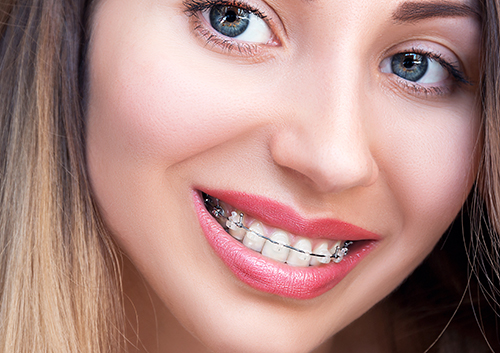
Congratulations! You have made the decision to get orthodontic treatment at our Youngstown, OH office. Now it’s time to choose among your various appliance options. Traditional metal brackets and wires, lingual braces, a series of aligners—they all have positives to recommend them. And for some people, ceramic braces are the clear favorite.

Ceramic braces work like regular metal braces. Brackets are bonded to the front of each tooth, and rubber bands surrounding the brackets hold the arch wire that gradually moves the teeth into alignment.

Ceramic braces, however, use brackets made of clear or tooth-colored ceramic or porcelain which blend beautifully with the color of your tooth. The elastic ligatures, or rubber bands, can be chosen to match the brackets or your enamel. There are self-ligating ceramic brackets which don’t use bands at all. Technology is even working on ways to make the arch wire less visible! The end result is braces that are almost undetectable.

If you want a less obvious appliance for professional or personal reasons, talk to us about ceramic braces. As always, there are other factors to consider before you decide, which we will be happy to discuss with you.

  • Ceramic brackets are very strong, but they are still more brittle than the metal model. If you play a contact sport, these might not be for you. (But whatever braces you choose, please wear a mouthguard when playing sports.)
  • Ceramic braces might not be ideal depending on the amount of alignment and bite correction that is needed. They might also take a bit more time to bring your teeth into alignment. We will be able to tell you if ceramic braces will work for you and if they might require a longer period to move your teeth to their perfect position.
  • Brackets can sometimes be somewhat larger (though this isn’t always the case), and, because they can be abrasive, are often recommended for upper teeth only. This way, the lower teeth will not impact, or be impacted by, contact with the upper teeth.
  • Oral hygiene can trickier with ceramic braces. Although today’s brackets aren’t as prone to staining, you still need to be careful to brush away the plaque that can accumulate around the brackets. And the bands are susceptible to staining by the usual suspects—coffee, tea, colas, blueberries, or any strongly colored food or beverage.
  • Costs will differ depending on the treatment method you choose. Talk to us about cost comparisons with other orthodontic treatments.

Ceramic braces, because they are so much less visible, are a popular orthodontic option, especially for older teenagers and adults. If you are interested, talk to Dr. Anthony Bisconti about this effective way to straighten your teeth—discreetly. Ceramic might be the clear solution for creating your lasting, beautiful smile.
Too old for braces? You Might be Surprised

April 26th, 2023

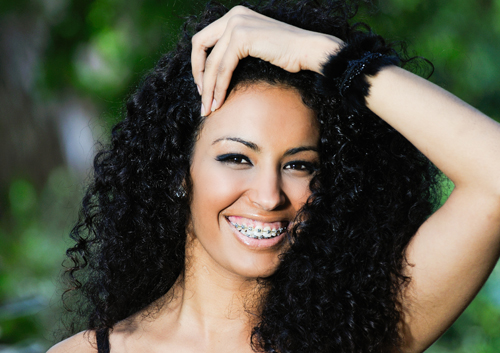
Although adolescence is a common time to get braces, there’s no reason for adults of any age to have to deal with crooked teeth, overbite, underbite, or other dental issues. In fact, the American Association of Orthodontists notes that demand for orthodontic treatment in adults continues to grow, with adults representing 20% of new patients.

You’re never too old for braces or other orthodontic appliances, but it’s important to consider the following:

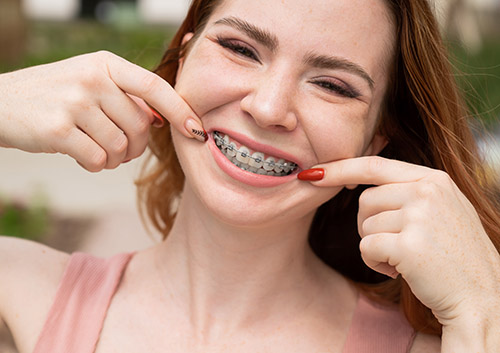
  1. Braces don’t have to be as noticeable as the metal brackets of the past. Many adults opt for ceramic or plastic braces, which are bone-colored or clear, respectively. Another option is a lingual appliance, which attaches to the back side of your teeth. These so-called “invisible” braces are much less noticeable than traditional options.
  2. By adulthood, bone growth has stopped. This means that certain structural changes can only be achieved by surgery. Although this typically affects people with significant crowding, bite, or jaw problems, Dr. Anthony Bisconti can provide an individualized treatment plan that addresses your unique issues.
  3. Treatment may take a bit longer. The length of orthodontic treatment tends to be slightly longer for adults than adolescents. Exact estimates vary by individual, but the average length of time for adult braces wearers is two years, according to the Harvard Medical School.
  4. Outcomes are just as good for adults! Many adults worry that it’s too late to treat their orthodontic problems. However, treatment satisfaction tends to be very high, which is a testament to how effective braces can be in middle-aged and older adults.

Are you too sensitive?

April 25th, 2023

We’re not talking about tearing up at the end of a sad movie, or that uncomfortable scratchy feeling you get from a coarse wool sweater—no shame in that kind of sensitivity! But it is a shame if you’re feeling unpleasant tooth sensitivity, especially while you’re wearing braces. No fear—we have some helpful ideas to make you more comfortable as you create your healthy, confident smile.

What do we mean by tooth sensitivity? You know it if you’ve felt it. Pain when you have a cold drink. Or a hot one. Or a sweet treat. Wincing when a light breeze hits your smile. Discomfort after an adjustment.

Fortunately, these annoying twinges can be avoided or eased with some proactive practices.

Keep Up with Your Brushing and Flossing

The oral bacteria in plaque break down enamel when they’re left on the teeth for too long. The result is a cavity, which leaves your sensitive dentin, the layer of the tooth between the enamel and the inner pulp chamber, exposed to elements which can trigger pain. These all-too-common elements include heat, cold, air, or sweet foods. If you suspect you have a cavity, a visit to the dentist will make sure your tooth is cleaned and filled to prevent further damage.

Better yet, prevent cavities before they cause tooth sensitivity. It can be harder to keep your teeth their cleanest while you’re in braces, but it’s more important than ever. You don’t want to have brackets and wires removed, even temporarily, to treat a cavity! You can keep decay at bay by:

  • Brushing after every meal and snack.
  • Flossing whenever necessary, making sure to clean around your brackets and wires.
  • Using cleaning tools made for braces for the easiest and most effective dental hygiene.

Avoid Aggressive Brushing

If you’re using anything other than a soft toothbrush, time for a shopping trip! Using a stiff bristled brush is almost always too abrasive for even the strongest enamel. And vigorous brushing is more harmful than helpful. Poor tools and poor technique can wear away enamel, and, when enamel is worn away, the more sensitive dentin is exposed. Your gums can also be injured, exposing the tops of your roots—which are more sensitive than the enameled crowns.

If your teeth are sensitive because of abrasive brushing, talk to Dr. Anthony Bisconti about possible solutions for keeping your teeth both clean and strong.

  • Use a softer-bristled brush.
  • Try toothpaste designed for sensitive teeth.
  • Practice proper brushing technique. Gently rub, don’t scrub!

Care for Yourself after Adjustments

Your teeth might be sensitive after an adjustment. This discomfort is normal, and should pass in a few days. In the meantime, treat yourself kindly.

  • Brush as usual, taking special care to brush gently.
  • Fill your menu with soft and soothing foods. Cool treats like classic ice cream and pudding, or healthier choices like frozen yogurt and fruit smoothies. Comfort foods like cream soups and mashed potatoes. Or all-day breakfasts of oatmeal, pillowy pancakes, or scrambled eggs.
  • Take over the counter medication as recommended and as necessary.

Be sensitive to your needs while you’re in braces. If you’re feeling any kind of tooth sensitivity, talk to Dr. Anthony Bisconti at our Youngstown, OH office. We have solutions which will make sure you’re both comfortable and twinge-free on your journey to a healthy, attractive smile!

Speech! Speech!

April 25th, 2023

If you are a student of Speech or Drama, you know how important it is to be clear and articulate. You’ve worked on pronunciation and projection, and the audience in the back row can understand every word.

And now you’ve gotten braces, and, suddenly, you don’t sound quite like yourself. Why? And, more important, what can you do?

  • Don’t Panic!

Many patients see no change at all in their speech after getting braces. With some orthodontic conditions or appliances, you might have problems pronouncing certain sounds, but these changes in articulation are usually quite temporary. 

  • Why Are You Sounding Off?

Every consonant is formed in a precise way as tongue, lips, and teeth work together. If you have brackets and wires in the way, or just got a new retainer, or have a set of aligners, you might find that your articulation is a little off, especially for sibilant sounds such as S’s and Z’s. Luckily, we humans are a flexible bunch, and it usually takes a very short time for our tongues and mouths to adapt to orthodontic appliances and return to normal pronunciation.

If your speech is affected at first because your lips and cheeks are sore or sensitive after getting braces, take time to take care of yourself! Use wax as often as needed to cover irritating brackets and wires, eat foods that are low in salt, spice, and acids, and follow your orthodontist’s instructions for taking care of your mouth. You should start feeling better within a few days, and should be fine after a week or two. If pain or discomfort persists, call your orthodontist.

  • Practice Makes Perfect

If you want to speed along the process of getting back to your normal pronunciation habits, practice! Read aloud, sing along to your favorite songs, recite lists of words with the specific sounds you want to work on. Oddly enough, to get back to your normal speech more quickly, slow down. Thinking before you speak is never a bad idea, and, in this case, thinking while you speak can help you position your tongue and mouth to verbalize tricky sounds more easily.

You don’t have to be a national debate champion or the world’s most blood-curdling Lady Macbeth to be concerned about clear speech. Talk to Dr. Anthony Bisconti during your next appointment at our Youngstown, OH office if you find you are having problems with pronunciation. Whether your appliance needs an adjustment, or you need a few suggestions for speech exercises, or it’s simply a matter of time, soon you’ll be back on the road to perfect pronunciation—and on the way to your perfect smile.

American Association Of OrthodontistsAmerican Board Of Orthodontics 2015American Dental AssociationInvisalign

Services